Import

New AD/CVD Case Filed Against Choline Salts from China 

A new antidumping and countervailing duty action has been filed against Choline Salts from China. The allegation is that imports from China are being dumped and unfairly subsidized.  

Full list of importers here.
Full list of exporters here. 

Background on AD/CVD Investigations 

Antidumping duty (“AD”) and countervailing duty (“CVD”) investigations are brought jointly by the U.S. International Trade Commission (“USITC”) and the U.S. Department of Commerce (“Commerce”). AD investigations are triggered when a domestic industry alleges that it has been injured by competing imports of particular goods from specific countries being sold at less than a fair value. Meanwhile, CVD investigations are initiated when a domestic industry alleges that it has been injured by competing imports unfairly subsidized by their governments. The domestic industry initiating the investigation is known as the petitioner, while the foreign industry participating in the investigation is known as the respondent. 

Scope of the Investigation 

The merchandise covered by these investigations is choline salts, in all forms and purities.  

The products subject to the investigation are currently classified in the Harmonized Tariff Schedule of the United States (HTSUS) under the following subheadings: 2923.10.0000, 2106.90.9998, 2309.90.1005, 2309.90.1015, 2309.90.1020, 2309.90.1030, 2309.90.1032, 2309.90.1035, 2309.90.1045, 2309.90.1050, 2309.90.9500, and 3824.99.9397.  

Full scope here.

Next Steps 

The Commerce Department will determine whether to initiate the […]

CAPE Now Accepts Reconciliation-Flagged Entries — But File in the Wrong Order and You Forfeit the Refund

If you have entries flagged for reconciliation and a reconciliation deadline inside the next 30 days, the order in which you file has just become a decision that can cost you your IEEPA refund. Under CBP’s June 29, 2026, CAPE deployment, once you file the reconciliation entry (Type 09), the underlying entries are locked out of CAPE in this phase. File the recon first, and you have stripped your own entries of the consolidated IEEPA refund path — permanently, for now. The new functionality is genuinely good news. The trap is in the sequence. 

Key points:

  • New as of June 29, 2026: CAPE will accept entries flagged for reconciliation (Entry Types 01, 02, 06) even when no Type 09 reconciliation entry has been filed yet. 
  • The sequence that wins: File the CAPE Declaration FIRST. CAPE strips the IEEPA duties from the flagged entries, then you file the reconciliation. 
  • The sequence that loses: File the reconciliation entry first. The underlying entries are then ineligible for CAPE in this phase. 
  • Still not covered: Entries where the reconciliation entry is already on file — those wait for a future CAPE phase. 

Same eligibility limits as Phase 1 carry over: unliquidated entries and entries within 80 days of liquidation only. 

The Challenge: Reconciliation Was a Hole in Phase 1 

When CBP launched Phase 1 of the Consolidated Administration […]

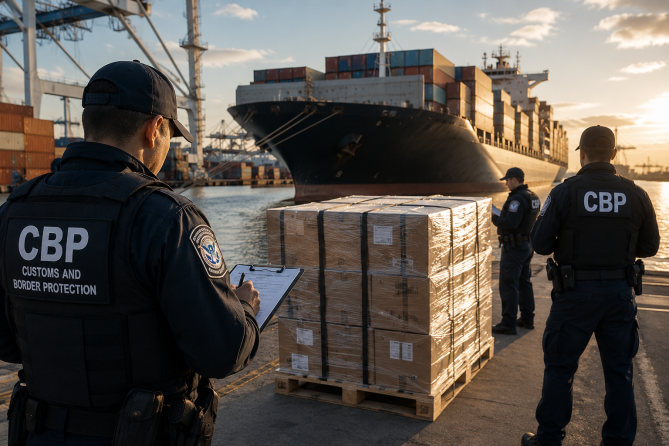
CBP Seized Your Goods at the Border: Your Options and Next Steps 

For more information on this topic, check out our webinar: ‘Goods Detained or Seized by CBP? Understand Your Options.” Watch here. 


Summary: When CBP seizes imported goods at the border, importers have several options — including filing a Petition, submitting an Offer in Compromise, or pursuing court action. This article explains the difference between detention and seizure, outlines the steps importers should take immediately after receiving a CBP Seizure Notice, and describes how a customs attorney can help recover seized merchandise and prevent future seizure. 


Importers expect the import process to run smoothly, but when a product is not compliant with U.S. laws and regulations, CBP is authorized under 19 CFR Part 162 and 19 CFR Part 151 to detain or seize goods upon importation. 

When goods arrive at a U.S. port of entry, CBP has the authority to detain a shipment if there is a question about its admissibility or compliance with U.S. laws and regulations. Detention is not the same as seizure. It is a temporary hold that gives CBP time to review the shipment and allows the importer to respond. During this window, a customs attorney can communicate directly with CBP on your behalf, provide the documentation or legal arguments needed to resolve the issue, and work to get your goods released before the situation escalates. 

If you do not respond effectively, CBP may move forward with a formal […]

The CPSC eFiling Deadline is Right Around the Corner!  

Summary: On December 18, 2024, the CPSC voted to approve a Final Rule requiring importers of regulated consumer products to electronically file Certificate of Compliance data at the time of entry. The rule takes effect July 8, 2026, for most imported consumer products. This article covers what the CPSC eFiling requirement means for importers, and the steps businesses should take now to ensure compliance before the deadline. 


On July 8, 2026, the CPSC’s mandatory eFiling requirements take effect for most imported consumer products. That means importers can no longer wait to be asked for a Certificate of Compliance. These certificates must now be electronically filed in CBP’s Automated Commercial Environment (ACE) at the time of entry, not after the fact.  

Importers that are not compliant with the applicable effective date may experience delays in the release of their shipments and increased scrutiny by CPSC at the port of entry. For products entering from a Foreign Trade Zone, the compliance date is January 8, 2027. 

CPSC’s eFiling Proposal 

Since 2008, importers have been required to maintain Certificates of Compliance stating that the product they are importing meets all applicable safety standards. However, these certificates did not need to be filed at the time of import.

In June 2022, CPSC announced a Beta Pilot test with CBP for the eFiling of certificate data for regulated […]

CBP Just Rewrote the Forced Labor Rulebook: What the New Operational Guidance Means for Importers

Short summary: On June 9, 2026, CBP issued new guidance supplementing its 2022 UFLPA guidance and other resources with a single document covering every forced-labor authority it enforces. The new guidance outlines CBP’s detention and exclusion processes and gives practical guidance on how to respond.


On June 9, 2026, U.S. Customs and Border Protection (CBP) published its new Forced Labor Enforcement Operational Guidance for Importers (Publication No. 5560-0526). It is not a refresh. It updates the June 13, 2022, UFLPA Operational Guidance for Importers and, for the first time, consolidates all forced-labor enforcement authorities CBP wields into a single 89-page reference. 

That consolidation is the story. Until now, importers had to stitch together separate sources to understand how the Uyghur Forced Labor Prevention Act (UFLPA), Withhold Release Orders and Findings under 19 U.S.C. § 1307, and the Countering America’s Adversaries Through Sanctions Act (CAATSA) actually differ in practice. CBP has now mapped all of them — including the exact timelines, the review paths, and the documentation bar — in one place. The practical effect: ignorance of the process is no longer a defensible position. 

The one-line summary every importer needs 

CBP detains or excludes goods it suspects were made, wholly or in part, with forced labor — and the burden is on you to prove they weren’t, on a clock that can […]

Go to Top