Best Practices

FTC Cracks Down on False “Made in the USA” Claims 

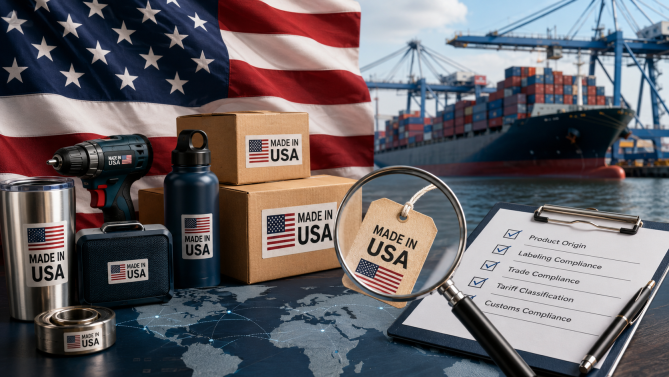
The Federal Trade Commission (FTC) recently announced law enforcement actions involving three companies that falsely claimed that their products were made in the United States.  

Made in the USA

The “Made in the USA” labeling rules were enacted to prevent deceptive advertising and ensure customers can make informed purchasing choices. The concept of labeling products with the correct country of origin dates all the way back to the McKinley Tariff Act in 1890, and Congress and federal agencies have updated “Made in the USA” rules over the years.  

FTC Jurisdiction 

The FTC is charged with preventing deception and unfairness in the marketplace. Under the FTC Act, the Commission may bring legal action against “false or misleading claims that a product is of U.S. origin”. The agency is authorized to issue a civil penalty of up to $40,654 per violation. 

The FTC has issued guidance on complying with the “Made in the USA” standard, most recently in 2021. View the latest guidance here.

When Can I Say Made in the USA? 

For a product to be considered as “Made in the USA” without qualification, that product must be “all or virtually all” made in the U.S. How the Commission determines whether a product is “all or virtually all” made in the U.S. is by looking at whether there was “a ‘reasonable basis’ to support the claim at the time it is made”. To prove […]

FDA Announces One-Day Inspection Pilot

The U.S. Food and Drug Administration (FDA) announced that it is piloting one-day inspectional assessments. These assessments will be shorter, more focused, and will complement existing standard FDA inspections.  

Shorter Inspections, More Coverage 

Launched in April 2026, the pilot is part of a broader initiative to make the agency’s inspectional resources more targeted and efficient. The new assessments will allow for broader coverage, enabling the agency to assess more facilities without compromising regulatory rigor. 

The pilot is being conducted across multiple FDA inspectorates, including human and animal foods, biologics, medical products, and clinical research programs. Facilities are selected using risk-based criteria such as:  

  • Product type 
  • Prior inspection outcomes 
  • Operational characteristics  

As of late April 2026, the FDA has completed approximately 46 one-day assessments.  

The agency made clear that one-day inspectional assessments are not intended to replace standard FDA inspections. Instead, they are meant to provide an additional tool to the agency’s enforcement approach. The ‘one-day’ framework is also flexible – investigators retain authority to expand the scope or duration of an assessment if warranted.  

The pilot will continue through fiscal year 2026. The FDA is currently developing evaluation metrics to assess effectiveness, including inspection duration, escalation rates, and the utility of findings in informing risk-based decision-making. 

What Facility Owners and Operators Should Do 

Facility owners and operators should remain ready […]

Importer End-of-Year Checklist: How to Strengthen Compliance and Prepare for the Year Ahead

For U.S. importers, the end of the year is a critical moment to evaluate compliance, correct issues, and prepare for the year ahead. With tariff changes, supply chain uncertainty, and an increased focus on enforcement, importers who take a proactive approach now will start the new year strong. Here’s a practical checklist for your year-end review.

1. Review Import Data for Accuracy

Begin with a thorough audit of your import data. Confirm that HTS classifications are correct and current, declared values accurately reflect your transactions, and country-of-origin determinations are well documented. Small mistakes can lead to large penalties.

2. Reassess Tariffs and Duty Exposure

Year-end is the ideal time to evaluate whether you are paying unnecessary duties and explore your options for tariff mitigation strategies. Consider what exclusions have changed, whether tariff engineering may reduce costs, or whether sourcing strategies should be updated. Many importers discover duty-saving opportunities simply by reassessing their tariff positions annually.

3. Strengthen Forced Labor Compliance

With UFLPA enforcement intensifying, importers must confirm that supplier information, ownership structures, and supply chain documentation are up to date. Now is the time to verify traceability records, refresh internal training, and assess whether high-risk suppliers require additional review.

4. Update Written Compliance Procedures

If your compliance manual or SOPs haven’t been updated this year, they’re likely outdated. Written processes should reflect current regulations, product updates, tariff changes, and internal workflow adjustments. CBP expects importers to document their […]

Five Tips for SMEs Looking to Scale Wellness Brands in the US

DTL President Jennifer Diaz was featured in Santander Navigator! Read below or on Santander here.

Pre-planning and investing in regulatory compliance measures are key to success

The US is the most lucrative wellness market in the world – and for some small and medium-sized enterprises (SMEs) that produce supplements, the potential for growth and a bigger bottom line is difficult to ignore. 

And who would blame them? The US wellness sector is valued at US$2tn and is poised to continue growing, recording an average annual growth rate of 8.3% between 2019 and 2023, according to research by the Global Wellness Institute

In contrast, China’s market, ranked the second-largest in the world, trails at a more modest US$870bn, followed by Germany at $310bn.

However, rushing in without being fully compliant could result in products being blacklisted or seized at the border, says Jennifer Diaz, an attorney and founding partner at Miami-based Diaz Trade Law, which specializes in customs and US Food and Drug Administration (FDA) laws and compliance.

Here, Diaz offers her top five tips for new brands to stay compliant and off the FDA’s blacklist.

1. Know the regulators

One of the first steps for SMEs planning to import supplements into the US is to register with the FDA, as they are considered a food product, Diaz says.

Companies also need to designate […]

Trade Policy Is Changing Rapidly—Prepare Your Business for What’s Next

Trade policies are shifting faster than ever, with new tariffs, complicated regulations, and heavy enforcement measures impacting businesses across industries. If you are an importer, staying ahead of these changes is critical to maintaining smooth operations and avoiding financial setbacks.

With trade policy in flux, now is the time to ensure you are on solid footing by auditing your compliance strategies, reassessing tariff exposure, and ensuring your business is prepared for what’s ahead.

Audit Your Business Before CBP Does

Conducting an audit of your business to check for import compliance is an essential step to avoid costly penalties, thwart supply chain disruptions, and to minimize legal risk. An audit helps identify potential compliance gaps, ensuring that your existing business practices are in compliance with all applicable regulations. It also allows businesses to proactively address issues before they escalate.

Import Report Card

Diaz Trade Law can provide a customized ACE report card to give you an overview of your import compliance. The report contains a summary of your import transactions and identifies potential issues in your business’ processes as well as substantive recommendations to ensure compliance. The report provides information like:

  • Your last 5 years of import history
  • List of HTS’s you use
  • Total amounts paid in AD/CVD
  • Manufacturer ID’s reported to Customs
  • Inconsistencies in reporting
  • Total value of imports and duties paid by year
  • Review of countries of origin of your imported merchandise
  • Use of Free Trade Agreements
  • Your surety, bond coverage, and bond type
  • And more!

Lastly, the Report Card service […]

Go to Top