U.S. Department of Commerce (DOC)

ACE: Auditing Your Import History

In FY 2020 alone, U.S. Customs and Border Protection (“CBP”) import audits resulted in over $44.6 million being collected by CBP. Similarly, CBP collected over $20.1 million in FY 2020 from trade-related penalties and liquidated damages. Prior to CBP auditing you, there is a lot you can do to be proactive about import compliance. The first step is getting a clear picture of your imports by accessing and analyzing your import data on the Automated Commercial Environment (“ACE”). An ACE  audit can identify duty-saving opportunities and open risks.

To date, CBP has collected $87.8 billion in China 301 tariffs. If you have paid Section 301 China tariffs on Lists 3 and 4 and you have joined the landmark lawsuit demanding full refunds on these tariffs paid, it is critical that you understand the extent of China tariffs that you have paid, and proactively look out for liquidations. Proactively and comprehensively auditing your ACE import data is the first step.

Whether you are new to importing or a seasoned professional, this one-hour webinar is a must attend. Register today to hear directly from our Diaz Trade Law President Jennifer (Jen) Diaz about audit risks and duty-saving opportunities. Jen is a Chambers ranked, Board Certified International Attorney specializing in customs and international trade.
[…]

USCIT Invalidates Section 232 Tariffs on Certain Steel and Aluminum Derivative Imports

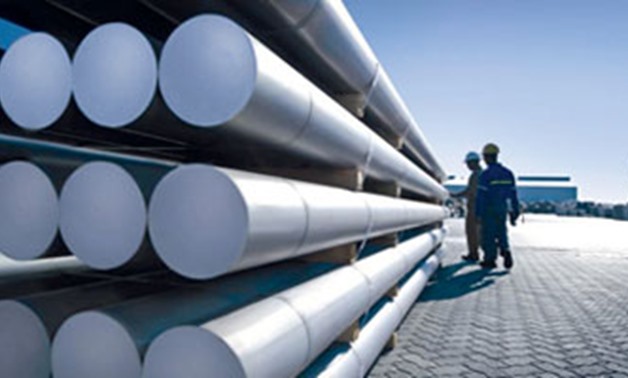
Aluminum - EgyptTodayBackground on Section 232 Aluminum and Steel Tariffs

Section 232 investigations, administered by the U.S. Commerce Department, are conducted to determine the imports of certain goods on national security. Historically, Section 232 investigations have been conducted regarding U.S. imports of crude oil and petroleum products and uranium, among other critical imports. Under the Trump administration, the Commerce Department initiated investigations of U.S. imports of aluminum and steel on April 27, 2017. The investigation resulted in an affirmative determination that such imports harm U.S. national security. As a result of the investigation’s findings, Trump imposed tariffs on certain U.S. imports of aluminum and steel on national security grounds. An exclusion process was also implemented in which U.S. importers could apply for tariffs to be excluded for certain steel and aluminum product imports.

[…]

New Antidumping Petition Against Imports of Certain Honey Products

Background on AD/CVD Investigations

Antidumping duty (“AD”) and countervailing duty (“CVD”) investigations are brought jointly by the U.S. International Trade Commission (“USITC”) and the U.S. Department of Commerce (“Commerce”). AD investigations are triggered when a domestic industry alleges that it has been injured by competing imports of particular goods from specific countries being sold at less than a fair value. Meanwhile, CVD investigations are triggered when a domestic industry alleges that it has been injured by competing imports that are being unfairly subsidized by their governments. The domestic industry initiating the investigation is known as the petitioner while the foreign industry participating in the investigation is known as the respondent.

[…]

Understanding Strategic Trade Authorization

Co-Authored by Sharath Patil

Background on Export Administration Regulations

Over 95% of the world’s consumers are outside of the United States. Opportunities abound for U.S. companies that export. However, exporting is a privilege and not a right. U.S. exporters have an important responsibility to adhere to U.S. export control laws, including the Export Administration Regulations (“EAR”).

Administered by the U.S. Commerce Department, the EAR is a set of regulations which governs whether U.S. persons may export or transfer goods, software, and technology outside of the United States or to non-U.S. citizens. U.S. exporters have an important responsibility to adhere to the EAR. Violations of the EAR carry hefty civil and criminal penalties. Exporters can pay hundreds of thousands of dollars in penalties, lose export privileges, and even be imprisoned.

[…]

Anti-Circumvention, EAPA, Dumping Duties & the Spreadability of Cases

This one-hour webinar will provide an overview of AD/CVD, U.S. Customs and Border Protection’s enforcement actions and investigative process, as well as a review of EAPA regulations and provide insights on best practices to protect your company in this contentious area of U.S. Customs and Border Protection enforcement.

Background on EAPA

The Enforce and Protect Act of 2015 (EAPA) allows U.S. Customs and Border Protection (“CBP”) to investigate whether a company has evaded anti-dumping and countervailing (AD/CVD) duties in an on-the-record investigation. EAPA enforcement has increased considerably in recent years. In fact, in Fiscal Year 2020, CBP collected $287 million in duties via EAPA enforcement – this is a 500 percent increase since the beginning of the EAPA program in FY 2017.

On April 21, 2021 at 12:00 PM, Jennifer Diaz and David Craven will present a webinar on Anti-Circumvention/EAPA/Dumping Duties & the Spreadability of Cases.

[…]

Go to Top