Enforcement

Do’s and Don’ts of Filing a Commodity Jurisdiction Request

Co-Authored by Sharath Patil

An Introduction to Export Controls

Over 95% of the world’s consumers are outside of the United States. Opportunities abound for U.S. companies that export. However, exporting is a privilege and not a right. U.S. exporters have an important responsibility to adhere to U.S. export control laws, including the Export Administration Regulations (“EAR”), and the International Traffic in Arms Regulations (“ITAR”). Violations of export control laws carry hefty civil and criminal penalties. Exporters can pay hundreds of thousands of dollars in penalties, lose export privileges, and even be imprisoned for violations of U.S. export control laws.

[…]

Potential Relief from China Tariffs Coming

Co-Authored by Sharath Patil

Background on Section 301 Tariffs

A key element of the U.S.-China trade war, initiated under the Trump administration and continuing through Biden’s first term, was the imposition of China tariffs under Section 301. Section 301 is a mechanism via which the President can retaliate against foreign countries that violate U.S. trade agreements or engage in acts that are “unjustifiable” or “unreasonable” and burden U.S. commerce. With regard to China, the U.S. Trade Representative (“USTR”) found that China’s acts, policies, and practices related to intellectual property and innovation are unreasonable or discriminatory and burden or restrict U.S. commerce. Accordingly, a broad set of tariffs were instituted. Section 301 tariffs for goods originating from China have been so expansive that U.S. Customs revenue has nearly doubled from $41.6 billion in FY 2018 to $71.9 billion in FY 2019 and $74.4 billion in FY 2020.

[…]

COVID-19’s Impact on 2020 Trade Flows

COVID-19’S IMPACT ON 2020 TRADE FLOWS

Diaz Trade Law’s President, Jennifer Diaz,  and Associate Attorney, Sharath Patil, are enthusiastic to announce that our article, “COVID-19’S IMPACT ON 2020 TRADE FLOWS” was published by the Customs and International Trade Bar Association (CITBA) in its Spring 2021 newsletter. Below is the article for your reading pleasure.

[…]

USCIT Invalidates Section 232 Tariffs on Certain Steel and Aluminum Derivative Imports

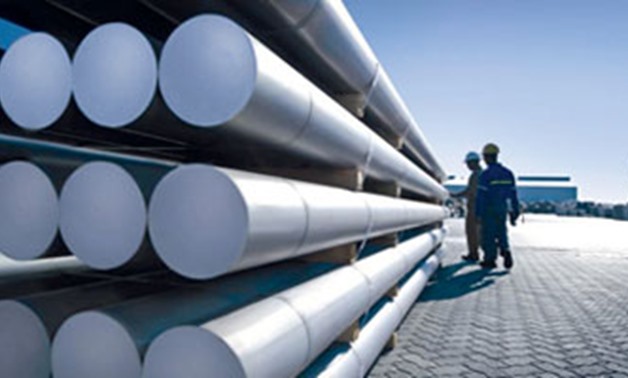
Aluminum - EgyptTodayBackground on Section 232 Aluminum and Steel Tariffs

Section 232 investigations, administered by the U.S. Commerce Department, are conducted to determine the imports of certain goods on national security. Historically, Section 232 investigations have been conducted regarding U.S. imports of crude oil and petroleum products and uranium, among other critical imports. Under the Trump administration, the Commerce Department initiated investigations of U.S. imports of aluminum and steel on April 27, 2017. The investigation resulted in an affirmative determination that such imports harm U.S. national security. As a result of the investigation’s findings, Trump imposed tariffs on certain U.S. imports of aluminum and steel on national security grounds. An exclusion process was also implemented in which U.S. importers could apply for tariffs to be excluded for certain steel and aluminum product imports.

[…]

REGISTER TODAY! NEI Accredited Webinar Importing 101 – Introduction to U.S. Customs

Webinar Importing 101 Introduction to US CustomsCo-Authored by Denise Calle

Whether you are new to importing or seasoned, this one-hour webinar is a must attend. Register today to hear directly from this specialized, expert trio on the “Top 10 Tips When Importing to Ensure Compliance” with real case studies:

[…]

Go to Top