Enforcement

Jewelry Company Charged in $86M Duty Evasion Scheme

On November 17, 2025, the owner of an Indonesian jewelry company (USB Gold) and two employees were charged with taking part in a scheme to evade over $86 million in duties on jewelry imports. 

The employees were arrested and charged with one count of conspiracy to commit wire fraud and were detained. The company co-owner, who was also charged, remains in Indonesia and has not yet been arrested.

The defendants allegedly engaged in a complex scheme to import over $1.2 billion of jewelry and illegally defraud the United States out of more than $86 million in customs duties and tariffs. 

The alleged scheme included two parts:

  • First, UBS Gold made jewelry in Indonesia and shipped it to Jordan, which had a Free Trade Agreement with the United States, before sending it to the United States. The defendants then falsely claimed that UBS Gold jewelry had been manufactured in Jordan, which avoided the duty that would otherwise apply.
  • Second, when the U.S. announced additional tariffs on Indonesia and Jordan earlier this year, the company began shipping scrap gold from the U.S. to Jordan, which they falsely claimed was gold jewelry that simply needed to be assembled or finished in Jordan. Instead, the defendants and co-conspirators swapped the scrap gold for UBS Gold jewelry made in Indonesia, which they then shipped from Jordan to the U.S. The […]
Potential Government Shutdown on the Horizon and No Contingency Plans in Sight

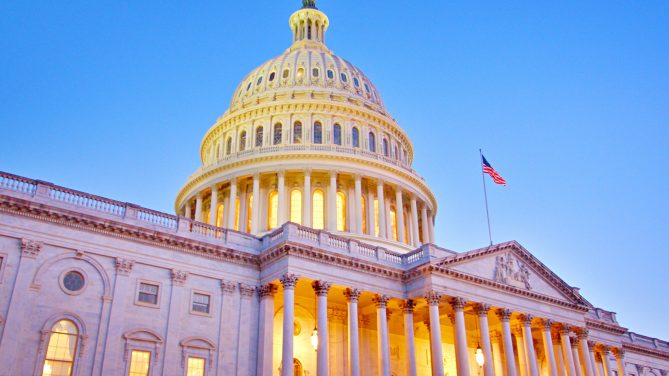
Government funding will lapse at midnight on Tuesday, September 30, absent Congressional action. With a number of contentious issues still at play, including spending limits, immigration policy, and healthcare funding, some say a shutdown is looking more and more likely.

What makes this potential shutdown different from previous lapses in funding is the lack of contingency plans within the relevant agencies. The White House’s Agency Contingency Plan page is blank. 

Until agencies update their guidance, we can only look to previous contingency plans.

Below is a breakdown of previously issued agency guidance. ,

U.S. Customs and Border Protection

According to the Department of Homeland Security’s most recent contingency plan (March 2025) cargo inspection functions at ports of entry will remain active during a shutdown. However, certain activities, such as training and auditing, are not required to be carried out during this time. In addition, back-office support positions are not likely to be deemed essential and will be furloughed. Refunds, audits, ruling requests, etc., would be delayed until the shutdown ends.

There remains uncertainty around which specific offices will be deemed essential. For example, Forced Labor Communications may be furloughed, resulting in delays in reviewing the Enforce and Protect Act (EAPA) and Uyghur Forced Labor Prevention Act (UFLPA) allegations.

U.S. Department of Commerce

According to the Department of Commerce’s most recent contingency plan (September 2023), some International Trade Administration (ITA) […]

Reminder! Three Upcoming USTR Filing Deadlines

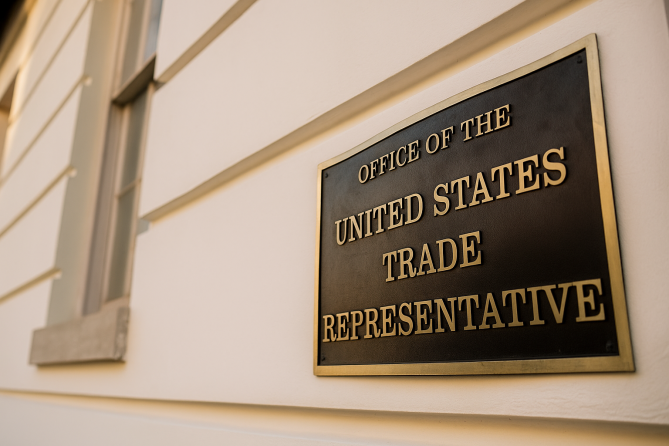
This month, the United States Trade Representative (USTR) announced it is seeking comments from the public and trade community on three initiatives: (i) extension of 301 exclusions; (ii) the National Trade Estimate Report on Foreign Trade Barriers, and (iii) joint Review of USMCA.

Extending 301 Exclusions

There are currently 178 effective exclusions in the Section 301 investigation of China’s acts, policies, and practices related to technology transfer, intellectual property, and innovation. These products are exempt from additional 301 duties. USTR has extended these exclusions several times, including a recent 90-day extension through November 29, 2025. USTR is seeking public comment on whether any of the 178 effective exclusions warrant further extension beyond November 29, 2025.

Comments are due October 16, 2025.

National Trade Estimate Report

Each year, USTR publishes the National Trade Estimate Report on Foreign Trade Barriers (NTE Report). USTR is seeking input to assist it in identifying significant foreign barriers to, or distortions of, U.S. exports of goods and services and U.S. foreign direct investment. 

Commenters should submit information related to one or more of the following categories of foreign trade barriers:

  • Import policies
  • Technical barriers to trade
  • Sanitary and phytosanitary measures
  • Government procurement
  • Intellectual property protection
  • Services
  • Investment
  • […]

ICYMI: Technology Company Pleads Guilty to Export Control Violations, Agrees to $140M Fine

The U.S. Attorney’s Office for the Northern District of California and the Counterintelligence and Export Control Section (CES) of the Department of Justice’s (DoJ) National Security Division announced that Cadence Design Systems, Inc. of San Jose, California, agreed to plead guilty to resolve criminal violations of export controls. 

As part of the plea agreement, Cadence will pay criminal penalties of nearly $118 million. 

In addition to the charges, the Department of Commerce’s Bureau of Industry and Security (BIS) also announced the resolution of a civil enforcement action against the company in which Cadence agreed to pay over $95 million in civil penalties. 

The DoJ and BIS have coordinated the resolution of the parallel investigation, and each agreed to a partial credit against their fine for payments made to satisfy the other agency’s fine. Under the coordinated agreement, Cadence will pay criminal and civil penalties of more than $140 million.

Cadence committed criminal violations of the export control laws by selling hardware, software, and semiconductor design intellectual property to the National University of Defense Technology (NUDT) in China. NUDT was added to the Department of Commerce’s Entity List in February 2015. The university was involved in the development of supercomputers with applications for military and nuclear explosive simulations. 

Cadence and its Chinese subsidiary engaged in a conspiracy to commit export control violations by exporting this technology to NUDT without obtaining the requisite licenses from […]

ICYMI: Patio Furniture Company Agrees to Pay $4.9 Million to Resolve Duty Evasion Allegations

On July 24, 2025, the Department of Justice (DoJ) announced that Grosfillex, Inc., a Pennsylvania furniture company, agreed to pay $4.9 million to resolve allegations it evaded antidumping and countervailing duties (AD/CVD).

Grosfillex submitted false forms to Customs and Border Protection (CBP) claiming that furniture parts made of extruded aluminum from China were not subject to AD/CVD. The company attempted to hide the aluminum extrusions by falsely packing them as sham “furniture kits.” Additionally, for a different subset of extrusions, the company failed to correct customs forms it had submitted previously, even after learning that the forms contained false information.

The investigation arose from a whistleblower lawsuit filed under the False Claims Act by a former employee of Grosfillex. Under the False Claims Act, private citizens can sue on behalf of the government and share in any recovery. In this case, the whistleblower will receive $962,662.74.

Duty Evasion is on the Rise

This case is just one example of the growing incentive to cheat that comes with higher tariffs. Whether it’s through misclassifying goods, undervaluing imports, or using deceptive transshipment routes, some companies think they are being creative, but, instead, are participating in outright illegal strategies to reduce their tariff liability.

Higher tariffs have even contributed to the emergence of a cottage industry of “tariff reduction” companies that suggest ways to cut import costs. However, many of these so-called strategies amount to evasion, […]

Go to Top