U.S. Customs and Border Protection (CBP)

Forced Labor Enforcement Just Crossed a Border: What CBP’s Serbia Copper WRO Means for Your Supply Chain

Key Takeaways 

  • CBP continues to chase the company, not just the country. Zijin’s parent was already on the UFLPA Entity List for forced labor in China; this Withhold Release Order (WRO) hits its Serbian copper operation on a separate evidentiary basis. Moving production to a “friendly” country does not move you out of CBP’s reach. 
  • Copper just joined the enforcement map. Forced-labor detentions are no longer concentrated in apparel, solar, and cotton. If you import copper—or anything containing it—your supply chain is now in scope, and most copper-reliant importers have done zero forced-labor due diligence. 
  • The burden is on you, and it lands the moment your shipment is detained. Under a WRO, there is no notice and no grace period. You either prove your goods are clean by detailed documentary evidence, or you export or destroy them. 

On June 16, 2026, U.S. Customs and Border Protection (CBP) issued a Withhold Release Order against copper and copper products manufactured in Serbia by Serbia Zijin Copper D.O.O.—the fourth WRO of Fiscal Year 2026 and the second targeting a Serbian operation in roughly six months. Effective immediately, CBP personnel at every U.S. port of entry will detain shipments of copper and copper products from this company. 

If you read that as another distant enforcement headline, you are missing the part that should concern you. This […]
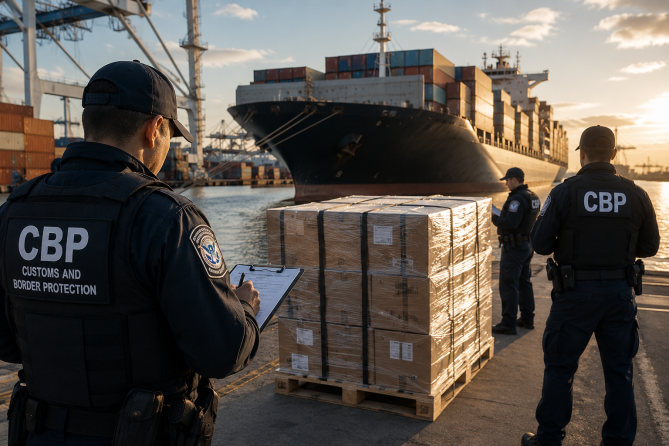
CBP Seized Your Goods at the Border: Your Options and Next Steps 

For more information on this topic, check out our webinar: ‘Goods Detained or Seized by CBP? Understand Your Options.” Watch here. 


Summary: When CBP seizes imported goods at the border, importers have several options — including filing a Petition, submitting an Offer in Compromise, or pursuing court action. This article explains the difference between detention and seizure, outlines the steps importers should take immediately after receiving a CBP Seizure Notice, and describes how a customs attorney can help recover seized merchandise and prevent future seizure. 


Importers expect the import process to run smoothly, but when a product is not compliant with U.S. laws and regulations, CBP is authorized under 19 CFR Part 162 and 19 CFR Part 151 to detain or seize goods upon importation. 

When goods arrive at a U.S. port of entry, CBP has the authority to detain a shipment if there is a question about its admissibility or compliance with U.S. laws and regulations. Detention is not the same as seizure. It is a temporary hold that gives CBP time to review the shipment and allows the importer to respond. During this window, a customs attorney can communicate directly with CBP on your behalf, provide the documentation or legal arguments needed to resolve the issue, and work to get your goods released before the situation escalates. 

If you do not respond effectively, CBP may move forward with a formal […]

The CPSC eFiling Deadline is Right Around the Corner!  

Summary: On December 18, 2024, the CPSC voted to approve a Final Rule requiring importers of regulated consumer products to electronically file Certificate of Compliance data at the time of entry. The rule takes effect July 8, 2026, for most imported consumer products. This article covers what the CPSC eFiling requirement means for importers, and the steps businesses should take now to ensure compliance before the deadline. 


On July 8, 2026, the CPSC’s mandatory eFiling requirements take effect for most imported consumer products. That means importers can no longer wait to be asked for a Certificate of Compliance. These certificates must now be electronically filed in CBP’s Automated Commercial Environment (ACE) at the time of entry, not after the fact.  

Importers that are not compliant with the applicable effective date may experience delays in the release of their shipments and increased scrutiny by CPSC at the port of entry. For products entering from a Foreign Trade Zone, the compliance date is January 8, 2027. 

CPSC’s eFiling Proposal 

Since 2008, importers have been required to maintain Certificates of Compliance stating that the product they are importing meets all applicable safety standards. However, these certificates did not need to be filed at the time of import.

In June 2022, CPSC announced a Beta Pilot test with CBP for the eFiling of certificate data for regulated […]

Bosch Agrees to Pay $36 Million Penalty to BIS for Unauthorized Shipments to Huawei 

Robert Bosch GmbH (Bosch), the German multinational engineering and technology company, has agreed to pay a $36,184,680 penalty to the U.S. Department of Commerce’s Bureau of Industry and Security (BIS) for exporting controlled items to Huawei Technologies Co. and its affiliates without the required U.S. government authorization. 

What Happened 

Between September 2020 and September 2024, Bosch exported approximately $72.4 million worth of Micro-Electro-Mechanical Systems (MEMS) sensor products and automotive software from abroad to Huawei and its affiliates. The exported items were subject to the Export Administration Regulations (EAR) under the Foreign Direct Product Rule, a rule that extends U.S. export controls to certain foreign-produced items that incorporate U.S. technology or are manufactured using U.S. equipment. Because Huawei and its affiliates are listed on BIS’s Entity List, any shipment of items subject to the EAR requires a license from BIS. No such license or authorization was obtained. 

The MEMS sensors at issue are widely used in consumer products, including smartphones, wearable technology, and automobiles. 

The Penalty 

In addition to the $36 million BIS civil penalty, Bosch separately agreed with the Department of Justice to disgorge profits from the transactions, with an actual payment of approximately $3.6 million. BIS suspended approximately $3.6 million of its penalty as credit for the disgorgement, bringing Bosch’s total financial exposure to roughly $39.8 million. 

Bosch filed a Voluntary Self-Disclosure with […]

CBP Just Rewrote the Forced Labor Rulebook: What the New Operational Guidance Means for Importers

Short summary: On June 9, 2026, CBP issued new guidance supplementing its 2022 UFLPA guidance and other resources with a single document covering every forced-labor authority it enforces. The new guidance outlines CBP’s detention and exclusion processes and gives practical guidance on how to respond.


On June 9, 2026, U.S. Customs and Border Protection (CBP) published its new Forced Labor Enforcement Operational Guidance for Importers (Publication No. 5560-0526). It is not a refresh. It updates the June 13, 2022, UFLPA Operational Guidance for Importers and, for the first time, consolidates all forced-labor enforcement authorities CBP wields into a single 89-page reference. 

That consolidation is the story. Until now, importers had to stitch together separate sources to understand how the Uyghur Forced Labor Prevention Act (UFLPA), Withhold Release Orders and Findings under 19 U.S.C. § 1307, and the Countering America’s Adversaries Through Sanctions Act (CAATSA) actually differ in practice. CBP has now mapped all of them — including the exact timelines, the review paths, and the documentation bar — in one place. The practical effect: ignorance of the process is no longer a defensible position. 

The one-line summary every importer needs 

CBP detains or excludes goods it suspects were made, wholly or in part, with forced labor — and the burden is on you to prove they weren’t, on a clock that can […]

Go to Top