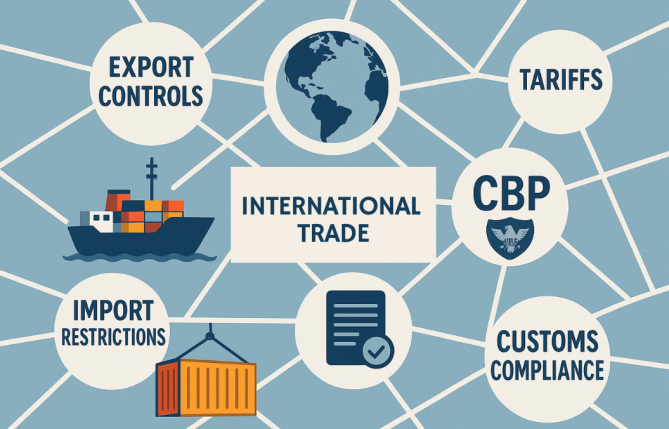
U.S. Customs and Border Protection (CBP)

Outdated Trade Regulations – CBP Open to Feedback

Whether you’re a seasoned importer or just entering the trade world, keeping up with thousands of pages of regulations can be a challenge. 

A stated priority of the current administration is deregulation. On January 31, 2025, President Trump signed an Executive Order titled “Unleashing Prosperity Through Deregulation.” The Order requires that whenever an agency promulgates a new rule, regulation, or guidance, it must identify at least 10 existing rules, regulations, or guidance documents to be repealed.

At last month’s Trade and Cargo Security Summit, CBP said they and their partner agencies are seeking feedback on what regulations are obsolete or simply don’t reflect the reality of the current trade environment.

Here’s a sampling of some potential obscure and obsolete regulations that CBP may consider revisiting (what are your additions to this list?):

Allowing Non-Resident Importers to Act as an Importer of Record in the U.S.

Although there are many entities that legitimately use the exception found in 19 CFR 141.18, which permits non-resident corporations to make entry of goods into the U.S. (as an importer of record), companies can also do so with malicious intent. The non-resident entity solely needs a U.S. agent for service of process and a customs bond. This particular exception is one that a bad actor can use surreptitiously. For example, a non-resident importer can create a shell […]


Trade Policy Is Changing Rapidly—Prepare Your Business for What’s Next

Trade policies are shifting faster than ever, with new tariffs, complicated regulations, and heavy enforcement measures impacting businesses across industries. If you are an importer, staying ahead of these changes is critical to maintaining smooth operations and avoiding financial setbacks.

With trade policy in flux, now is the time to ensure you are on solid footing by auditing your compliance strategies, reassessing tariff exposure, and ensuring your business is prepared for what’s ahead.

Audit Your Business Before CBP Does

Conducting an audit of your business to check for import compliance is an essential step to avoid costly penalties, thwart supply chain disruptions, and to minimize legal risk. An audit helps identify potential compliance gaps, ensuring that your existing business practices are in compliance with all applicable regulations. It also allows businesses to proactively address issues before they escalate.

Import Report Card

Diaz Trade Law can provide a customized ACE report card to give you an overview of your import compliance. The report contains a summary of your import transactions and identifies potential issues in your business’ processes as well as substantive recommendations to ensure compliance. The report provides information like:

  • Your last 5 years of import history
  • List of HTS’s you use
  • Total amounts paid in AD/CVD
  • Manufacturer ID’s reported to Customs
  • Inconsistencies in reporting
  • Total value of imports and duties paid by year
  • Review of countries of origin of your imported merchandise
  • Use of Free Trade Agreements
  • Your surety, bond coverage, and bond type
  • And more!

Lastly, the Report Card service […]

CBP Issues Proposed Rule to Enhance Low-Value Shipment Enforcement

U.S. Customs and Border Protection (CBP) announced a Notice of Proposed Rulemaking (NPRM) that would impose new data collection requirements on low-value shipments, also known as de minimis shipments. If adopted, the rule would create a new, alternative process for entering low-value shipments. The new process would require the submission of advance data such as origin, destination, and contents of the shipment.

De Minimis Background

The concept of de minimis shipments into the United States stems from customs regulations aimed at simplifying the importation of low-value goods. The term “de minimis” refers to shipments that fall below a certain value threshold, allowing them to enter the country with minimal duties or taxes.

Historically, the threshold was set at $200 but was raised to $800 in 2016 under the Trade Facilitation and Trade Enforcement Act (TFTEA). This change was designed to reduce administrative burdens on CBP and facilitate faster processing of e-commerce shipments, which were rapidly increasing in volume. Over the last decade, the number of shipments claiming the de minimis exemption has increased significantly, from approximately 140 million a year to over one billion a year.

Today, CBP processes over 4 million de minimis shipments into the U.S. each day. Current regulations require very little information about these shipments, making it increasingly difficult for CBP to identify and intercept high-risk shipments. The U.S. Congress and the Biden Administration have called for de minimis reforms.

The Proposed Rule

The rule proposes the establishment of an enhanced entry process that would require the […]

7 Tips for Filing a Prior Disclosure with CBP

All parties involved in the importation of merchandise into the US, such as importers, customs brokers, exporters, shippers,  and foreign suppliers and manufacturers, can file a Prior Disclosure (PD) with Customs and Border Protection (CBP) to  proactively disclose certain false statements, acts, or omissions in violation of 19 U.S.C. § 1592. By doing so, these parties may benefit from reduced penalties as a result of the PD filing.

Here are seven tips for filing a prior disclosure with CBP:

  1. The PD Must be Submitted in Writing

Although oral disclosures are permissible, CBP’s regulations at 19 C.F.R. 162.74 requires that oral disclosures must be followed-up with a written submission within 10 days. If you do decide to inform CBP orally first, it is recommended to keep a great paper trail of who you spoke with, what you advised CBP, and thereafter, ensure you summarize this in writing within 10 days of your discussion.

  1. Follow a Checklist to Ensure Your PD Has All the Required Information

The most critical part of the prior disclosure process is ensuring all required components are included. If a PD is deficient, it can be rejected and thereafter used against you. Required information CBP will be looking for includes:

  • Identification of the class or kind of merchandise involved in the disclosed violation
  • Identification of the importations by customs entry number, or indication of each concerned CBP port of entry and the approximate dates of entry
  • Specific false statements, omissions or acts involved in the disclosed […]

DHS Announces New High Priority Sectors for UFLPA Enforcement

The Department of Homeland Security’s (DHS) Forced Labor Enforcement Task Force (FLETF) released an update to the Strategy to Prevent the Importation of Goods Mined, Produced, or Manufactured with Forced Labor in the People’s Republic of China.

Strategy Background

DHS released the first publication of the UFLPA Strategy in June 2022. The strategy outlines a multi-pronged approach to combating forced labor in global supply chains.The strategy includes a comprehensive assessment of the risk of importing goods with forced labor in the PRC, high priority sectors for enforcement, guidance to importers, recommendations to accurately identify affected goods, and more. DHS released the first update to the publication in August of 2023.

The Latest Update  

The update builds on two years of the Administration’s enforcement of the UFLPA. The latest strategy identified new high priority sectors for enforcement – aluminum, polyvinyl chloride (PVC), and seafood. These industries were identified due to higher risk of forced labor or state labor transfer of Uyghurs and other ethnic minorities from the Xinjiang Uyghur Autonomous Region (XUAR).

Entities in these sectors will now be prioritized for review for enforcement actions such as inclusion on the UFLPA Entity List, sanctions, export limitations, and visa restrictions.

Other products previously identified as high priority such as apparel, cotton and cotton products, silica-based products including polysilicon, and tomatoes remain high priority sectors.

The latest updates also outline how the FLETF has significantly advanced their objectives through several initiatives, such as strong enforcement by U.S. Customs and Border Protection (CBP); expansion of the UFLPA Entity List; […]

Go to Top