Jen

About Jennifer Diaz

This author has not yet filled in any details.
So far Jennifer Diaz has created 1131 blog entries.

Tariff and Macroeconomic Risk Disclosures:

Lessons from Recent Shareholder Litigation Against Dow and Tronox

Authors:  

Jennifer Diaz, President, Diaz Trade Law
Amber Pirson, Attorney, Diaz Trade Law 

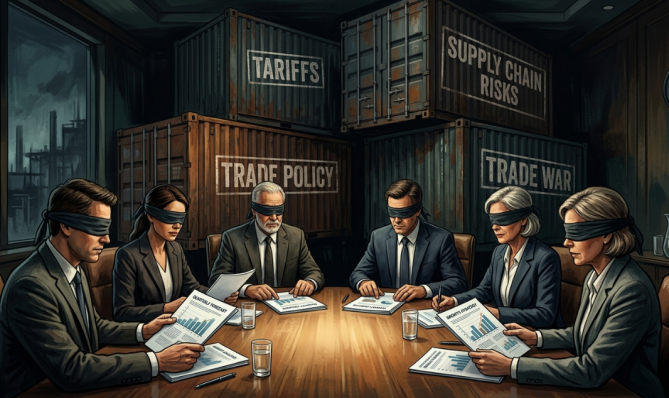
Recent securities class actions against Dow Inc. and Tronox Holdings plc underscore the growing litigation risk associated with tariff‑related and broader economic disclosures in periodic reports, earnings calls, and investor communications. These cases highlight how shareholder plaintiffs are scrutinizing statements that characterize tariffs and related headwinds as manageable, temporary, or hypothetical when subsequent developments suggest a more pronounced or foreseeable impact. 

As public companies continue to navigate volatile trade policy, supply chain disruption, and demand uncertainty, these lawsuits provide concrete guidance on how the SEC’s disclosure framework—particularly risk factors and Management’s Discussion and Analysis (MD&A) “known trends” disclosures—may be applied in hindsight by regulators and private litigants. 

Regulatory Framework: Risk Factors and Known Trends 

SEC rules make clear that companies must disclose certain risks to investors. For example, Item 105 of Regulation S‑K requires companies to disclose material risks that make an investment speculative or risky, while Item 303 requires MD&A discussion of known trends, events, or uncertainties reasonably likely to have a material impact on financial condition or operating results. In this context, tariffs – particularly where they affect costs, pricing, demand, or dividends – have increasingly been viewed as classic “known trends,” rather than contingent or […]

IEEPA Tariff Refund Updates

Recent developments surrounding tariffs imposed under the International Emergency Economic Powers Act (IEEPA) have created both opportunity and uncertainty for U.S. importers. With the U.S. Supreme Court ruling that IEEPA-based tariffs are unlawful, many companies understandably assume that refunds will follow automatically. In reality, that is far from guaranteed.  

For importers seeking to recover duties paid under these tariffs, a proactive legal and compliance strategy is essential.  

Recent Updates at the CIT 

On March 27, 2026, Judge Eaton issued an Order requiring CBP to liquidate or reliquidate all entries without the IEEPA duties. This Order applies to (1) unliquidated entries, (2) liquidated entries being protested, and (3) final liquidated entries. See CIT Order Dated March 27, 2026.

On March 31, 2026, CBP reported progress in creating the Consolidated Administration and Processing of Entries (CAPE), which will allow importers to submit refund requests.

On April 1, 2026, Judge Eaton ordered CBP to report on the progression of CAPE on April 14, 2026. In addition, in this Order, Judge Eaton encouraged importers to enroll in the ACH program because CBP will now only issue refunds electronically. Further, regarding liquidated entries, Judge Eaton stated that “importers should be aware of the option to file protests.   

On April 6, 2026, the plaintiff in the anchor case, Atmus Filtration, filed a Notice of Dismissal, thereby dropping from the case. However, the refund process […]

By |2026-04-15T02:41:27-04:00April 14, 2026|tariffs|0 Comments

Trade-Based Money Laundering Red Flags: What CBP’s New CTPAT AML Guidance Means for Importers

As global supply chains grow more complex, regulators are increasingly focused on how legitimate trade can be exploited to move illicit funds. In July 2025, U.S. Customs and Border Protection (CBP) reinforced this focus by issuing updated CTPAT Warning Indicators for Trade‑Based Money Laundering (TBML) and Terrorist Financing.  

Although the target audience for this guidance is CTPAT participants, all importers, logistics providers, and financial institutions can be implicated in TBML schemes if they don’t proactively screen for such activity in their supply chains. The Department of the Treasury released its 2026 National Money Laundering Assessment, which further highlights how TBML schemes are used to facilitate the transfer of illicit proceeds. Any business engaged in international trade that is unaware of how TBML works or fails to screen for such practices is exposed to engaging in TBML. 

CBP’s message is simple: trade compliance and anti‑money laundering (AML) expectations are converging, and companies that fail to adapt face growing regulatory, operational, and reputational risk. CBP also emphasizes that TBML rarely presents as a single red flag; instead, it emerges through patterns that deserve closer scrutiny and informed judgment.  

Warning Indicators 

One of the most significant risk areas identified by CBP involves pricing and payment anomalies that defy commercial logic. Persistent over‑ or under‑invoicing, unexplained invoice changes, or pricing that is misaligned with market norms may indicate that a trade […]

Breaking Trade News: IEEPA Tariff Case Update, DOL Launches Forced Labor Tools

Here is a recap of the latest customs and international trade news:     

Administration 

  • President Trump said that he will impose 50% tariffs on any country that sells military weapons to Iran. 
  • President Trump said that the U.S. will consider tariff and sanctions relief for Iran as it negotiates an end to the war.  

Customs and Border Protection (CBP) 

  • CBP released a new Harmonized System Update containing over 500 Automated Broker Interface records and 116 Harmonized Tariff Schedule records, including updates to 232 duties on aluminum, steel, and copper imports. 
  • CBP and the Consumer Product Safety Commission (CPSC) seized nearly 350,000 batteries that did not comply with child protective packaging standards. 

Court of International Trade (CIT) 

  • The lead plaintiff in the IEEPA refund case filed a notice of dismissal in its case at the CIT on April 6. Shortly after, Judge Eaton lifted the stay on another IEEPA refund case filed by importer Euro-Notions Florida, and reissued his order requiring CBP to pay IEEPA refunds for all unliquidated, not finally liquidated, and finally liquidated entries.  

Department of Labor (DOL) 

  • DOL
By |2026-04-22T16:39:58-04:00April 10, 2026|news, Snapshot, Uncategorized|0 Comments

New AD Case Filed Against Polytetramethylene Ether Glycol From China, South Korea, Taiwan, and Vietnam   

A new antidumping action has been filed against Polytetramethylene Ether Glycol from China, South Korea, Taiwan, and Vietnam. The allegation is that imports from China, South Korea, Taiwan, and Vietnam are being dumped.  

Full list of exporters here. 

Import volume here.  

Background on AD Investigations 

Antidumping duty (“AD”) is brought jointly by the U.S. International Trade Commission (“USITC”) and the U.S. Department of Commerce (“Commerce”). AD investigations are triggered when a domestic industry alleges that it has been injured by competing imports of particular goods from specific countries being sold at less than a fair value. The domestic industry initiating the investigation is known as the petitioner, while the foreign industry participating in the investigation is known as the respondent. 

Scope of the Investigation 

The merchandise covered by these investigations is all forms of polytetramethylene ether glycol (“PTMEG”).  

The products subject to the investigation are currently classified in the Harmonized Tariff Schedule of the United States (HTSUS) under the following subheadings: 3907.29.00 and 2932.11.00.   

Full scope here.

Next Steps 

The Commerce Department will determine whether to initiate the investigations within 20 days. The USITC will reach a preliminary determination of material injury or threat of material injury within 45 days. 

As with any proceeding, participation is very important to protect your rights. We urge anyone who imports Polytetramethylene Ether Glycol from China, South Korea, Taiwan, or Vietnam to […]

Go to Top