Breaking Trade News: Furniture & Cabinet Tariff Delay, No IEEPA Decision from SCOTUS

Here is a recap of the latest customs and international trade news:    

Administration

  • The Trump Administration announced the postponement of the scheduled January 1st increase in the upholstered furniture, kitchen cabinets, and vanities 232 tariffs. They will remain at 25% (instead of 30% on furniture and 50% on kitchen cabinets and vanities) for an additional year.
  • The White House published a proclamation extending duty-free treatment of some agricultural products under quota from Israel through December 31, 2026. 

Supreme Court

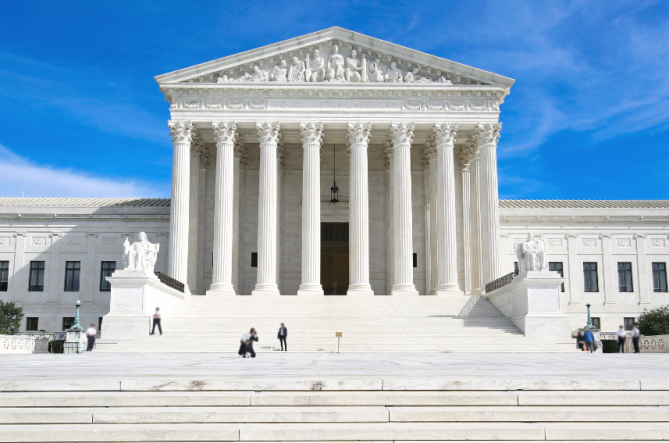
  • The Supreme Court did not release its much-anticipated decision on the fate of IEEPA tariffs on its opinion day, January 9. The Court said it may release additional opinions on January 14.

Industry News

  • The United States filed a customs penalty lawsuit against two importers and their owner, alleging that the defendants undervalued their entries to avoid hundreds of thousands of dollars in duties. The government is seeking a penalty of over $3.4 million.

Customs and Border Protection (CBP)

  • CBP published an Interim Final Rule regarding electronic refunds. Effective February 6, 2026, CBP will process all refunds electronically. The agency will not issue any refunds by check unless a waiver has been approved.
  • CBP will be […]
By |2026-01-12T11:02:11-05:00January 12, 2026|news, Snapshot|0 Comments

IEEPA May Be on the Chopping Block, But Your Duty Exposure Isn’t

On November 5, 2025, the Supreme Court of the United States (SCOTUS) held oral arguments for Trump v. V.O.S. Selections, Inc., regarding the legality of the International Emergency Economic Powers Act (IEEPA). The case will ultimately decide whether the Trump Administration has the authority to impose tariffs under IEEPA. Importers and trade professionals are watching the case closely, but even if the IEEPA tariffs are thrown out, the new administration has made clear that it will pivot and use other legal avenues to impose tariffs.  Since oral argument, multiple discussions have been held with the Department of Justice and the plaintiffs regarding any refund possibilities. Based on these discussions, it appears that the United States is anticipating losing this matter at the Supreme Court but wants to put barriers to recovery. The United States has also clearly stated that they intend to find other ways to impose similar duties.

The message is clear: even if the Supreme Court strikes down IEEPA tariffs, tariff exposure is here to stay. NOW is the time for importers to revisit their valuation practices, explore duty minimization strategies, and ensure they are taking every lawful step to minimize duty impact going forward.

Why Tariffs Will Stay Even if IEEPA Dies

Since the earliest days of the Trump Administration, the White House has made tariffs a cornerstone of their trade and “America First” policy. The President and Administration officials have repeatedly touted tariffs as one of the best tools available to level the international trade playing field, […]

By |2026-01-09T17:08:04-05:00January 9, 2026|tariffs|0 Comments

The Latest on Potential IEEPA Tariff Refunds

On November 5, 2025, the Supreme Court of the United States (SCOTUS) held oral argument for Trump v. V.O.S. Selections, Inc., regarding the legality of the International Emergency Economic Powers Act (IEEPA). Since the oral argument, companies, including giants such as Costco, have filed their own preemptive lawsuit in the Court of International Trade (CIT) to preserve their rights to potential refunds.

The following key question is when the SCOTUS will issue its decision. The normal  term of the SCOTUS starts on the first Monday of October and ends in late June or early July. Below is a calendar of the current SCOTUS term.

After oral argument, the Justices always hold a Justices’ Conference to discuss the case among themselves. During the Justices’ Conference, the Justices will cast their preliminary votes, as well as assign which Justice will write the majority, concurring, or dissenting opinion.   These draft opinions will be circulated as Justices seek to bring others to their position.

All opinions of the SCOTUS are normally issued by the last day of the SCOTUS term. However, there are no rules governing when decisions and opinions must be issued. According to the U.S. Courts website, “{t}ypically, decisions that are unanimous are released sooner than those that have concurring and dissenting opinions. While some unanimous decisions are handed down as early as December, some controversial opinions, even if oral argument is held in October, may not be handed down until the last day […]

By |2026-01-09T16:57:59-05:00January 9, 2026|tariffs|0 Comments

ICYMI: FDA Issues Final Guidance On Formal Dispute and Administrative Hearings of Final Orders for OTC Monograph Drugs

On December 23, 2025, the Food and Drug Administration (FDA) published a Federal Registerthe  notice announcing the availability of a final guidance for industry entitled “Formal Dispute Resolution and Administrative Hearings of Final Administrative Orders Under Section 505G of the Federal Food, Drug, and Cosmetic Act.” 

This guidance provides recommendations on the formal dispute resolution (FDR) and administrative hearings procedures for resolving disputes between the Center for Drug Evaluation and Research (CDER) and requestors and sponsors of drugs that will be subject to a final administrative order under section 505G of the Federal Food, Drug, and Cosmetic Act (FD&C Act). 

Background 

Section 505G of the FD&C Act was added by the Coronavirus Aid, Relief, and Economic Security Act (CARES Act) in March 2020. After the FDA issues a Final Order in accordance with section 505G(b)(2) of the FD&C Act, the FDA must afford eligible requestors or sponsors the opportunity for FDR and hearings on disputes over the Final Order. 

The FDA previously agreed to specific performance goals and procedures described in a commitment letter (read here). The commitment letter specified that the agency would revise previous guidance for industry to include circumstances and procedures under which FDR may be used with respect to Final Orders under section 505G of the FD&C Act. The letter also stated that the agency would issue guidance on its views regarding […]

CBP to Implement Fully Electronic Refund Processing via ACE

Effective February 6, 2026, CBP will process all refunds electronically. The agency will not issue any refunds by check unless a waiver has been approved.

Background

Historically, the majority of CBP refunds for the overpayment of duties, taxes, and fees were transmitted via paper checks issued by the U.S. Department of the Treasury. The issuance of electronic refunds via ACH has been available for some time, but opting-in for electronic refunds has been voluntary and limited in scope. In 2024 and 2025, approximately 30% of the refunds CBP issued annually were issued electronically.

On March 25, 2025, President Trump issued an Executive Order titled “Modernizing Payments To and From America’s Bank Account.” The order mandates the transition from paper checks to electronic payments for all Federal disbursements and receipts.

Electronic Refunds

To implement the electronic payments Executive Order, CBP published an Interim Final Rule on January 2, 2026, announcing that the agency will issue all refunds electronically (subject to certain exceptions under 31 CFR part 208) effective February 6, 2026. This rule applies to refunds issued to all importers, brokers, filers, sureties, service providers, facility operators, foreign trade zone operators, and carriers,  and any designated third parties listed on CBP Form 4811. After this date, CBP will not issue any refunds by check, unless a waiver has been approved. Comments on the Interim Final Rule are due March […]

Go to Top