tariff mitigation

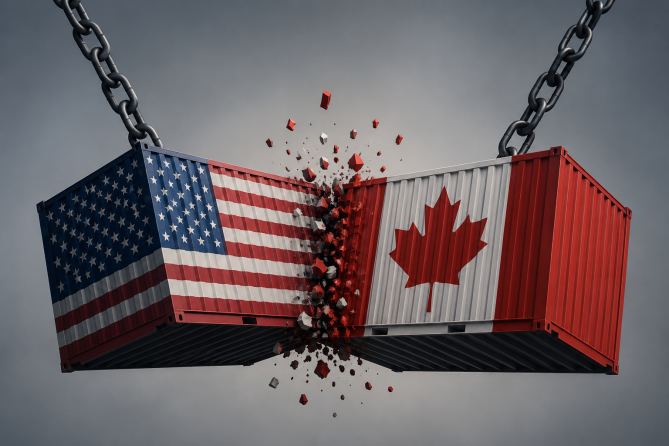
Trump Invokes Section 338 to Impose Additional Duties on Canadian Imports 

Short summary: The Trump Administration has announced new tariffs on Canadian imports and issued three presidential proclamations addressing Canada’s treatment of U.S. dairy products, alcoholic beverages, and motor vehicles. The actions rely on Section 338 of the Tariff Act of 1930 – a statutory authority that has remained largely unused for decades. 


On July 20, 2026, the Trump Administration published a fact sheet announcing new 50% tariffs on a broad range of Canadian imports. Simultaneously, the Administration issued three separate presidential proclamations targeting Canada’s treatment of U.S. dairy products, alcoholic beverages, and motor vehicles. According to the White House, these actions are intended to respond to what the Administration describes as Canada’s long-standing discrimination against U.S. commerce. 

The New Tariffs 

The White House announced that the United States will impose an additional 50% tariff on many Canadian-origin products beginning 30 days after the order’s issuance. According to the Administration, the new duties are intended to offset Canada’s alleged discriminatory treatment of American products and businesses. 

Products eligible for USMCA treatment are not exempt from the new tariffs. Several categories of goods are excluded from the new tariffs, including: 

  • Energy products 
  • Critical minerals 
  • Potash 
  • Fish 
By |2026-07-21T12:53:42-04:00July 21, 2026|Canada, International Trade, tariffs, USMCA|0 Comments

CAPE Now Accepts Reconciliation-Flagged Entries — But File in the Wrong Order and You Forfeit the Refund

If you have entries flagged for reconciliation and a reconciliation deadline inside the next 30 days, the order in which you file has just become a decision that can cost you your IEEPA refund. Under CBP’s June 29, 2026, CAPE deployment, once you file the reconciliation entry (Type 09), the underlying entries are locked out of CAPE in this phase. File the recon first, and you have stripped your own entries of the consolidated IEEPA refund path — permanently, for now. The new functionality is genuinely good news. The trap is in the sequence. 

Key points:

  • New as of June 29, 2026: CAPE will accept entries flagged for reconciliation (Entry Types 01, 02, 06) even when no Type 09 reconciliation entry has been filed yet. 
  • The sequence that wins: File the CAPE Declaration FIRST. CAPE strips the IEEPA duties from the flagged entries, then you file the reconciliation. 
  • The sequence that loses: File the reconciliation entry first. The underlying entries are then ineligible for CAPE in this phase. 
  • Still not covered: Entries where the reconciliation entry is already on file — those wait for a future CAPE phase. 

Same eligibility limits as Phase 1 carry over: unliquidated entries and entries within 80 days of liquidation only. 

The Challenge: Reconciliation Was a Hole in Phase 1 

When CBP launched Phase 1 of the Consolidated Administration […]

Go to Top