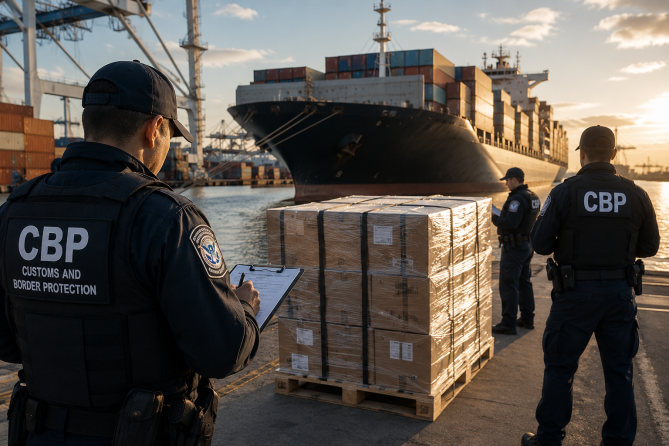
Seizures

CBP Seized Your Goods at the Border: Your Options and Next Steps 

For more information on this topic, check out our webinar: ‘Goods Detained or Seized by CBP? Understand Your Options.” Watch here. 


Summary: When CBP seizes imported goods at the border, importers have several options — including filing a Petition, submitting an Offer in Compromise, or pursuing court action. This article explains the difference between detention and seizure, outlines the steps importers should take immediately after receiving a CBP Seizure Notice, and describes how a customs attorney can help recover seized merchandise and prevent future seizure. 


Importers expect the import process to run smoothly, but when a product is not compliant with U.S. laws and regulations, CBP is authorized under 19 CFR Part 162 and 19 CFR Part 151 to detain or seize goods upon importation. 

When goods arrive at a U.S. port of entry, CBP has the authority to detain a shipment if there is a question about its admissibility or compliance with U.S. laws and regulations. Detention is not the same as seizure. It is a temporary hold that gives CBP time to review the shipment and allows the importer to respond. During this window, a customs attorney can communicate directly with CBP on your behalf, provide the documentation or legal arguments needed to resolve the issue, and work to get your goods released before the situation escalates. 

If you do not respond effectively, CBP may move forward with a formal […]

New Court Rulings on Marijuana-Related Paraphernalia: Understanding the Impact on Importers

The marijuana industry is rapidly growing, with more and more states legalizing its use for medical and/or recreational purposes. With this growth, there is an increase in the importation of products such as grinders, storage containers, rolling paper, pipes, and vape pens, both for business and personal use. More businesses are asking why there is an issue importing such items when they only intend to sell and distribute within the many states where marijuana is legal for medical or recreational use and have established their regulations for marijuana-related products. It is still essential to remember, while many states have legalized marijuana for medical or recreational use, marijuana remains illegal under federal law. 

This blog will address recent Court of International Trade (CIT) cases on this very topic and will be a part 2 to our previous blog covering U.S. Customs and Border Protection (CBP) seizures of drug paraphernalia.  

CBP Authority 

CBP has the power to seize “drug paraphernalia” products.  This does not only cover importations of products for commercial use, but also items for personal use with individuals traveling internationally seeking entry into the United States.  CBP’s website section: Know Before You Go – Prohibited and Restricted Items encourages individuals to contact CBP prior to traveling and make sure that prohibited or restricted items, such as drug paraphernalia, are not brought into the country, as they are not only subject to seizure pursuant to […]

2022: A Year in Review

From all of us at Diaz Trade Law, we are immensely grateful for your support this year. While returning to a new normal post-pandemic, Diaz Trade Law still managed to save our clients MILLIONS of dollars in 2022. It is with great joy that we finish off 2022 filled with numerous achievements and accomplishments we are humbled to share with you. We look forward to assisting you in what we envision will be a better and brighter 2023!

Below we share some of our top 2022 success stories with you.

[…]

How to Build and Maintain an Effective Import Compliance Plan

CBP enforcement is on the rise.  If your business is importing into the U.S., or wants to start, our one-hour, NEI accredited, webinar on “Building & Maintaining an Effective Import Compliance Plan”  will provide best practices and TOP tips to build an import compliance plan.

Register today to to hear directly from Senior Trade Advisor, Don Woods, DTL’s president, Jennifer Diaz, and Associate Attorney, Denise Calle as they discuss real life stories, current trends/risks associated with the import process, proactive ways to stay compliant, and the importance of training to avoid costly encounters with CBP. […]

Food Importers: How to Import Food Compliantly & Survive a FSVP Audit

The U.S. Food and Drug Administration (FDA) is now  auditing Foreign Supplier Verification Program (FSVP) Importers to ensure they comply with the FSVP program. To date, over 92 warning letters have been issued against companies for FSVP violations. If your business is importing food into the U.S., or wants to start, our one-hour, NEI accredited, webinar on “Importing Food in Compliance with U.S. FDA & Surviving A FSVP Audit” will provide best practices and TOP tips to comply with FDA regulations and avoid, navigate, and mitigate any potential  FDA compliance action.

Register today to to hear directly from Senior Trade Advisor, Domenic Veneziano, DTL’s president, Jennifer Diaz, and Associate Attorney, Denise Calle, on the pathway to legally import food and best practices for surviving a FSVP audit.

[…]

Go to Top