Export

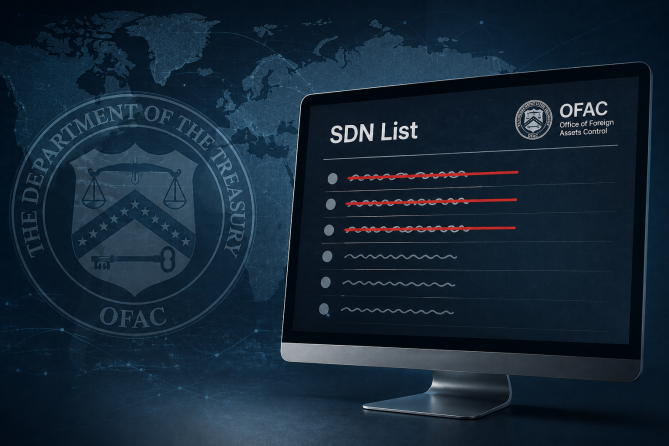
Getting Off the SDN List: A Practical Guide to OFAC’s Administrative Reconsideration Process 

Landing on the Office of Foreign Assets Control’s (OFAC) Specially Designated Nationals and Blocked Persons List (SDN List) is one of the most consequential things that can happen to a company or individual doing business in or with the United States. Assets are frozen, U.S. persons are barred from dealing with you, and banking relationships evaporate almost overnight.  

The good news is that SDN designations are not necessarily permanent. OFAC maintains a formal process – administrative reconsideration – for petitioning to have a person, entity, or piece of property removed from an OFAC-administered sanctions list. This article walks through how that process works, what to expect at each stage, and where clients most often stumble. 

Step One: Confirm You’re Using the Right Process 

Before filing anything, it’s worth pausing to confirm which removal process actually applies to your situation, because OFAC’s administrative reconsideration process is not a one-size-fits-all remedy. 

  • You are the designated party. If you, your organization, or your property appear on an OFAC-administered list because OFAC itself made the designation, the administrative reconsideration process under 31 C.F.R. § 501.807 is the correct path, and it runs through OFAC’s Reconsideration Portal. 
  • The designation was made by the State Department. Some names appear on OFAC-administered lists because the Department of State designated them (for example, under certain terrorism-related authorities). Removal in those cases goes through […]

Bosch Agrees to Pay $36 Million Penalty to BIS for Unauthorized Shipments to Huawei 

Robert Bosch GmbH (Bosch), the German multinational engineering and technology company, has agreed to pay a $36,184,680 penalty to the U.S. Department of Commerce’s Bureau of Industry and Security (BIS) for exporting controlled items to Huawei Technologies Co. and its affiliates without the required U.S. government authorization. 

What Happened 

Between September 2020 and September 2024, Bosch exported approximately $72.4 million worth of Micro-Electro-Mechanical Systems (MEMS) sensor products and automotive software from abroad to Huawei and its affiliates. The exported items were subject to the Export Administration Regulations (EAR) under the Foreign Direct Product Rule, a rule that extends U.S. export controls to certain foreign-produced items that incorporate U.S. technology or are manufactured using U.S. equipment. Because Huawei and its affiliates are listed on BIS’s Entity List, any shipment of items subject to the EAR requires a license from BIS. No such license or authorization was obtained. 

The MEMS sensors at issue are widely used in consumer products, including smartphones, wearable technology, and automobiles. 

The Penalty 

In addition to the $36 million BIS civil penalty, Bosch separately agreed with the Department of Justice to disgorge profits from the transactions, with an actual payment of approximately $3.6 million. BIS suspended approximately $3.6 million of its penalty as credit for the disgorgement, bringing Bosch’s total financial exposure to roughly $39.8 million. 

Bosch filed a Voluntary Self-Disclosure with […]

DoJ Declines Prosecution of Company That Self-Disclosed Export Control Offenses

The Justice Department announced that it will not be prosecuting Universities Space Research Association (USRA) for violations of U.S. export control laws, citing prompt self-disclosure and cooperation.

EAR Violation

In 2016, USRA was granted a contract with NASA to license and distribute aeronautics-related and U.S. Army-owned flight control software. Jonathan Soong was employed by USRA and was responsible for performing due diligence on prospective purchasers. Soong willfully exported software subject to the Export Administration Regulations (EAR) to Beijing University, knowing that an export control license was required for the export because it was on the Entity List.

Soong used an intermediary to avoid detection, and embezzled tens of thousands of dollars in software license sales. He ultimately plead guilty to willfully violating the EAR. He was sentenced to 20 months in prison.

Company Disclosure & Remediation

Within days of learning of Soong’s actions, USRA self-disclosed the violation to the Department’s National Security Division (NSD). The company fully cooperated with the ensuing criminal investigation, which eventually established that Soong had acted alone.

USRA’s cooperation included proactively collecting and disclosing evidence and providing detailed and timely responses to the government’s requests for information. USRA remediated the root cause of the misconduct by disciplining an employee who failed to appropriately supervise Soong, and by improving its internal controls and compliance program.

USRA also compensated the government both for the funds Soong embezzled, and for the time Soong had spent embezzling funds instead of performing his duties under the contract with NASA.

The DoJ cited the timely disclosure, cooperation, and […]

By |2025-05-29T12:48:05-04:00May 7, 2025|EAR, Export|0 Comments

BIS Releases New Edition of “Don’t Let This Happen to You”

The Department of Commerce’s Bureau of Industry and Security (BIS) published an updated version of Don’t Let This Happen to You!, a list of case examples highlighting BIS enforcement efforts including criminal cases.

Case highlights:

The publication highlights over 100 cases covering various violations of export control laws.

Military Controls

The owner of BQ Tree Consulting in Jacksonville, Florida, along with the President and Manager of the company were indicted for conspiring to illegally export military-grade combat rubber raiding craft (CCRC) to China.

The scheme involved providing a U.S. company with false end-use and end-user information for a front company in Hong Kong, which was used to complete the transaction ultimately destined for China. The intention was to reverse engineer the CRRC and engines to mass produce them for the Chinese People’s Liberation Army (PLA) Navy.

The company owner was sentenced to 16 months in prison, two years of supervised release, mandatory mental health screening, and a $200 special assessment. The company President was sentenced to 42 months confinement, three years of probation, a $50,000 criminal fine, and a $200 special assessment. The company manager was sentenced to 17 months in prison, one year of supervised release pending deportation, a prohibition on employment with any company that deals with the military, and a $100 special assessment.

National Security Controls

GlobalFoundries U.S. Inc., a semiconductor wafer manufacturing company headquartered in Malta New York violated the Export Administration Regulations (EAR) by sending 74 shipments of semiconductor wafers, valued at approximately $17.1 million, to SJ Semiconductor (SJS), a company […]

By |2024-11-22T07:13:34-05:00November 22, 2024|EAR, Export, U.S. Department of Commerce|0 Comments

BIS Issues Guidance to Financial Institutions on Best Practices for Compliance with the Export Administration Regulations

The Department of Commerce’s Bureau of Industry and Security (BIS) recently published guidance for financial institutions containing several recommendations for complying with the Export Administration Regulations (EAR).

The guidance provides recommendations on steps financial institutions can take to minimize the likelihood of EAR violations. The recommendations focus on three key areas: due diligence best practices, reviewing transactions for red flags, and real-time screening.

Due Diligence Best Practices

The guidance recommends that financial institutions incorporate EAR related due diligence into their compliance and risk management and compliance processes. Due diligence should be conducted both before onboarding a new customer and as part of regular due diligence thereafter.

Specifically, BIS recommends that financial institutions:

  • Review customers against lists of persons subject to BIS’s end-user restrictions
  • Review customers – and, where appropriate, customers’ customers – against lists of entities that have shipped Common High Priority List (CHPL) items to Russia since 2023
  • Ask a customer to certify that it has controls in place to comply with the EAR if the customer is engaged in the export, reexport or transfer of items subject to the EAR and is on a restricted-party list
Review Transactions for Red Flags

The guidance recommends that financial institutions review transactions on an ongoing basis for red flags:

  • Purchases under a letter of credit that are consigned to the issuing bank, not to the actual end user.
  • Transactions involving entities with little to no web presence, such as a website or a domain based email account.
  • A customer lacks or refuses to […]
Go to Top