EAPA

A Court Just Blocked an EAPA Evasion Action Over a 519% Duty Rate

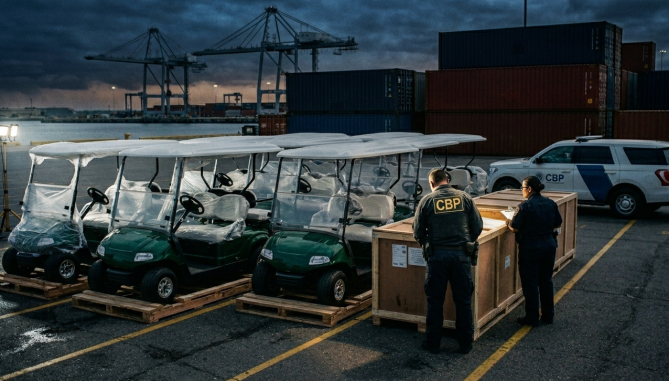
Quick Summary: On April 24, 2026, the U.S. Court of International Trade did something importers rarely see – it stepped in mid-investigation and blocked U.S. Customs and Border Protection (CBP) from enforcing interim measures in an Enforce and Protect Act (EAPA) evasion case. The measures had saddled the importer, ICON EV LLC, with a combined antidumping and countervailing duty (AD/CVD) cash-deposit rate of 519.23% and a “live entry” requirement that, on the company’s evidence, would have pushed it into bankruptcy within a month. The decision, ICON EV LLC v. United States, Slip Op. 26-42, is a meaningful crack in what has felt like an impenetrable EAPA enforcement wall, and it offers a roadmap for importers caught in the same trap. 

What is an EAPA evasion investigation? 

The Enforce and Protect Act gives CBP a fast, powerful tool to police the evasion of AD/CVD orders. When a competitor or a domestic industry coalition files a “reasonable allegation” that an importer is dodging duties through transshipment, misclassification, undervaluation, or other schemes, CBP must open an investigation within 15 business days and issue a final determination within 300 days. 

What many importers do not realize is that within 90 days of opening the investigation, CBP must impose “interim measures” if it forms a “reasonable suspicion” of evasion. Those measures can include suspending or extending liquidation of entries, requiring “live entry” (full documentation and duty payment before goods are released), and imposing AD/CVD cash-deposit rates. And critically, the statute does not require CBP to give the importer notice or a chance to respond before those interim measures […]

The Arena of EAPA: Transshipping, Pencils, and Evading Duties

Customs and Border Protection (CBP) investigates allegations of dumping or unfair foreign subsidies, but they also have the authority to investigate potential violations of any imposed Anti-Dumping or Countervailing Duties (AD/CVD) under the Enforce and Protect Act (EAPA) of 2015.

Customs describes EAPA as a “multi-party, transparent, administrative proceeding where parties can both participate in and learn the outcome of the investigation. It also maintains due process for parties to the investigation by providing an option for them to request administrative and judicial reviews of CBP’s determination as to evasion.” Self-assertions of transparency and due process aside, many have found EAPA cases to be highly secretive and not always fair.

Frequently, an EAPA case involves an allegation that Chinese goods are allegedly transshipped through another country (or only subject to minor processing) to avoid paying AD/CVD duties. Since AD/CVD duties are applicable based upon the commodities country of origin, nefarious companies can ship goods from China to for example, Vietnam, India, Mexico, Taiwan, Malaysia, or some other country, and claim that these goods do not originate from China after all. Importers, in good faith, will declare that their imports are not subject to AD/CVD duties because they are not aware of the true origin of the goods. Such importers might not be liable for penalties if their belief was in good faith and based on facts, but such importers would still be subject to massive duties. Thus, contrary to popular option, good/honest importers may also find themselves the recipient of […]

Anti-Circumvention, EAPA, Dumping Duties & the Spreadability of Cases

This one-hour webinar will provide an overview of AD/CVD, U.S. Customs and Border Protection’s enforcement actions and investigative process, as well as a review of EAPA regulations and provide insights on best practices to protect your company in this contentious area of U.S. Customs and Border Protection enforcement.

Background on EAPA

The Enforce and Protect Act of 2015 (EAPA) allows U.S. Customs and Border Protection (“CBP”) to investigate whether a company has evaded anti-dumping and countervailing (AD/CVD) duties in an on-the-record investigation. EAPA enforcement has increased considerably in recent years. In fact, in Fiscal Year 2020, CBP collected $287 million in duties via EAPA enforcement – this is a 500 percent increase since the beginning of the EAPA program in FY 2017.

On April 21, 2021 at 12:00 PM, Jennifer Diaz and David Craven will present a webinar on Anti-Circumvention/EAPA/Dumping Duties & the Spreadability of Cases.

[…]

Go to Top