CBP Enforcement

CBP Audit Preparation

Jennifer Diaz was recently published in Bloomberg Law!

Copyright 2026 Bloomberg Industry Group, Inc. Reproduced with permission. CBP Audit Preparation.

Editor’s Note: CBP’s modern enforcement strategy extends well beyond reviewing individual entries at the port of entry. The agency has broad authority to review an importer’s compliance at any point after entry, and can do so months or even years after the goods were imported. Through audits, assessments, and importer site visits, the agency evaluates whether importers have established effective internal controls and are exercising the “reasonable care“ required under U.S. customs law. These reviews may be triggered by a variety of factors including identified compliance risks, anomalies in import data, or as part of routine enforcement initiatives.

Receiving notice of a CBP review can understandably create concern within an organization. However, many of these reviews are not initiated because CBP has concluded that violations have occurred; rather, they are designed to evaluate an importer’s compliance systems, identify areas of risk, and determine whether additional review or corrective action is warranted.

Companies that understand the purpose of these reviews and prepare before receiving notice are generally in a far stronger position than those attempting to organize years of customs records after CBP has already initiated contact.

CBP’s Audit and Assessment Tools

Not every CBP review follows the same process. The scope, objectives, and level of  scrutiny vary depending on the type of review being conducted. While each review mechanism serves a distinct purpose, findings from an initial inquiry or assessment may prompt CBP […]

By |2026-08-27T06:19:53-04:00August 25, 2026|Bloomberg Import|0 Comments

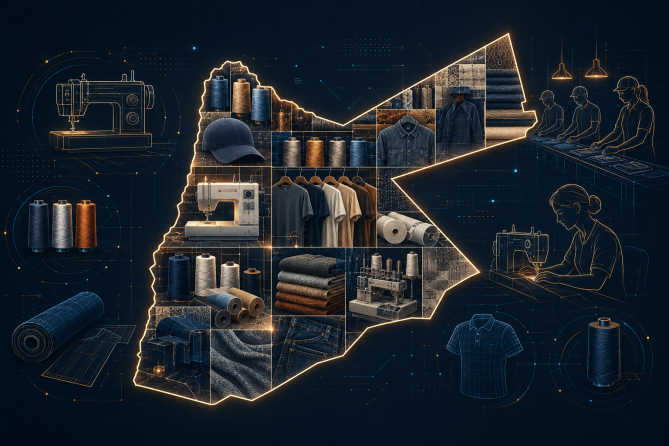
CBP Issues Two New WROs Against Jordan Garment Factories: What Importers Need to Know

Why importers who diversified out of China to FTA partners are now squarely in CBP’s forced-labor crosshairs — and the five-step package you need before your first detention notice. 


Short summary: CBP just issued two Withhold Release Orders against garment factories in Jordan, a U.S. free trade agreement partner. If you diversified out of China, thinking that solved your forced-labor exposure, this action is your wake-up call. Duty-free status is not a compliance shield. For apparel and textile importers, the window to build a defensible admissibility package is now, before a detention notice arrives. 


On June 23, 2026, U.S. Customs and Border Protection (CBP) issued two Withhold Release Orders (WROs) against garments produced by Needle Craft Ltd. and Casual Wear Apparel LLC — two garment-manufacturing factories in Jordan. Effective immediately, CBP will detain all garments produced by these two factories at every U.S. port of entry. These are the fifth and sixth WROs of fiscal year 2026, and they push CBP’s active enforcement docket to 58 WROs and eight Findings under 19 U.S.C. § 1307. 

If you read only one sentence of this post, read this one: the country you moved your sourcing to to escape China-related forced-labor risk is not safe by virtue of being a U.S. trade-preference partner. Jordan Apparel enters the United States duty-free under the U.S.–Jordan Free Trade Agreement and […]

By |2026-06-23T12:22:53-04:00June 23, 2026|Forced Labor|0 Comments

Forced Labor Enforcement Just Crossed a Border: What CBP’s Serbia Copper WRO Means for Your Supply Chain

Key Takeaways 

  • CBP continues to chase the company, not just the country. Zijin’s parent was already on the UFLPA Entity List for forced labor in China; this Withhold Release Order (WRO) hits its Serbian copper operation on a separate evidentiary basis. Moving production to a “friendly” country does not move you out of CBP’s reach. 
  • Copper just joined the enforcement map. Forced-labor detentions are no longer concentrated in apparel, solar, and cotton. If you import copper—or anything containing it—your supply chain is now in scope, and most copper-reliant importers have done zero forced-labor due diligence. 
  • The burden is on you, and it lands the moment your shipment is detained. Under a WRO, there is no notice and no grace period. You either prove your goods are clean by detailed documentary evidence, or you export or destroy them. 

On June 16, 2026, U.S. Customs and Border Protection (CBP) issued a Withhold Release Order against copper and copper products manufactured in Serbia by Serbia Zijin Copper D.O.O.—the fourth WRO of Fiscal Year 2026 and the second targeting a Serbian operation in roughly six months. Effective immediately, CBP personnel at every U.S. port of entry will detain shipments of copper and copper products from this company. 

If you read that as another distant enforcement headline, you are missing the part that should concern you. This […]

New Executive Order on Strengthening Customs Enforcement

On June 3, 2026, President Trump signed the Executive Order “Strengthening Customs Enforcement,” directing the Department of Homeland Security (DHS) and U.S. Customs and Border Protection (CBP) to overhaul the rules that govern importers of record (IORs). The accompanying White House Fact Sheet frames the Order as a truly significant tightening of importer responsibilities – higher bonds, mandatory domestic assets, a new “good standing” requirement on all importers, and sharp new limits on foreign IORs. As CBP put it in its announcement, importing into the United States “has for too long been treated as a right and not a privilege.” While the Order has set aggressive deadlines for Customs reforms, it leaves most of the operational details to future rulemaking, and several of those details could reshape day-to-day compliance.  

Overview: What the Executive Order Directs 

Within 180 days, the Order requires the Secretary of Homeland Security to revise importer eligibility rules under 19 U.S.C. § 1484, § 1498, and § 1623, among other authorities. The most notable changes for IORs will be: 

  • A requirement that every IOR maintain, at all times, a minimum level of tangible domestic assets, bonding, or both — plus an increase in the minimum required bond coverage. 
  • Expanded data and identification requirements, including anticipated import volumes, year organized, ownership and beneficial ownership disclosures, business affiliations, and […]

Three Enforcement Actions, One Message: Trade Violations Are Serious Crimes 

Learn more about this topic in our upcoming webinar: From Error to Action: Filing a Prior Disclosure with CBP 

As tariffs climb and global trade becomes more complex, a growing number of importers are testing the limits, or outright breaking the law, to reduce or avoid duty payments and other compliance costs. U.S. enforcement agencies, including Customs and Border Protection (CBP) and the Department of Justice (DOJ), have made it clear that customs fraud will not be tolerated and is a top enforcement priority. Three recent cases illustrate the new reality for enforcement. 

1. Undervaluation and the False Claims Act: $2.1 Million Settlement

An importer of fitness equipment agreed to pay $2.1 million to resolve allegations under the False Claims Act that it knowingly undervalued imported goods. 

According to the government, the company knowingly declared artificially low values on its imports in order to reduce tariff obligations. The company also failed to include the cost of computer tablets incorporated into packaged equipment.  

The settlement also resolves a qui tam False Claims Act case brought by a whistleblower, Mr. Greg Dahlstrom. Dahlstrom will receive $420,000 of the proceeds from the settlement. 

2. Importing Precursor Chemicals: Possible Life Sentence

On April 27, 2026, the United States Attorney for the Southern District of New York announced the unsealing of an indictment charging two Chinese nationals with importing a methamphetamine precursor chemical into the United States with the intent […]

By |2026-05-11T14:35:41-04:00May 2, 2026|Enforcement|0 Comments
Go to Top